Lost Lab Specimen in Transit: A Houston Response Plan
October 5, 2026 · By LabPath Logistics Editorial Team, Medical Logistics Desk
Quick Answer
When a lab specimen goes missing in transit, fix the last confirmed scan, trace the route and every stop, and tell the ordering facility right away so the provider can decide on recollection. If the package carried a requisition or patient label, the loss is also a possible HIPAA breach: a courier acting as a business associate must notify the covered entity without unreasonable delay and no later than 60 calendar days after discovery.
A lost lab specimen in transit is the failure nobody writes a procedure for until it happens. The clinic says the bag was picked up. The lab says it never arrived. The courier's log shows a pickup and nothing after it. Meanwhile a patient is waiting on a result that may now require a second draw — or, for a biopsy, cannot be repeated at all.
This guide is for Houston lab managers, clinic administrators, and outreach coordinators. It lays out what to do in the first hours, who decides what, when a missing package becomes a privacy incident, and what to put in place so the next search takes minutes instead of days. It is logistics guidance, not legal or clinical advice — your compliance officer and the ordering provider own those calls.
How Often Specimens Actually Go Missing
More often than most incident logs suggest. In an AHRQ Patient Safety Network case review, laboratory physicians Nam Tran and Ying Liu note that up to 75% of medical testing errors occur in the pre-analytical phase — before the specimen is ever analyzed — and cite one academic medical center laboratory that could not account for about six to seven specimens per week.
6–7 per week
Specimens one academic medical center lab could not account for, as cited by Tran and Liu, AHRQ PSNet WebM&M, 2020
The consequences are tracked where states require reporting. Minnesota treats the irretrievable loss of an irreplaceable biological specimen as a reportable adverse event. According to a Patient Safety Solutions summary of the Minnesota Department of Health's 14th annual adverse health events report, hospitals reported 26 such events in one year; 77% of the specimens were lost outright rather than damaged, and 12 patients needed additional monitoring or treatment as a result.
The same review points at the mechanism: specimens change hands several times before they reach their destination, and each exchange is a chance to be misplaced, discarded, or mixed into another shipment. A courier run is a chain of exactly those exchanges.
The First Hours: A Response Sequence
Most missing specimens are misplaced, not gone. They are in the wrong bin at receiving, still in a lockbox, or riding in a tote that was unloaded at the wrong stop. The search works when it runs in a fixed order and starts immediately.
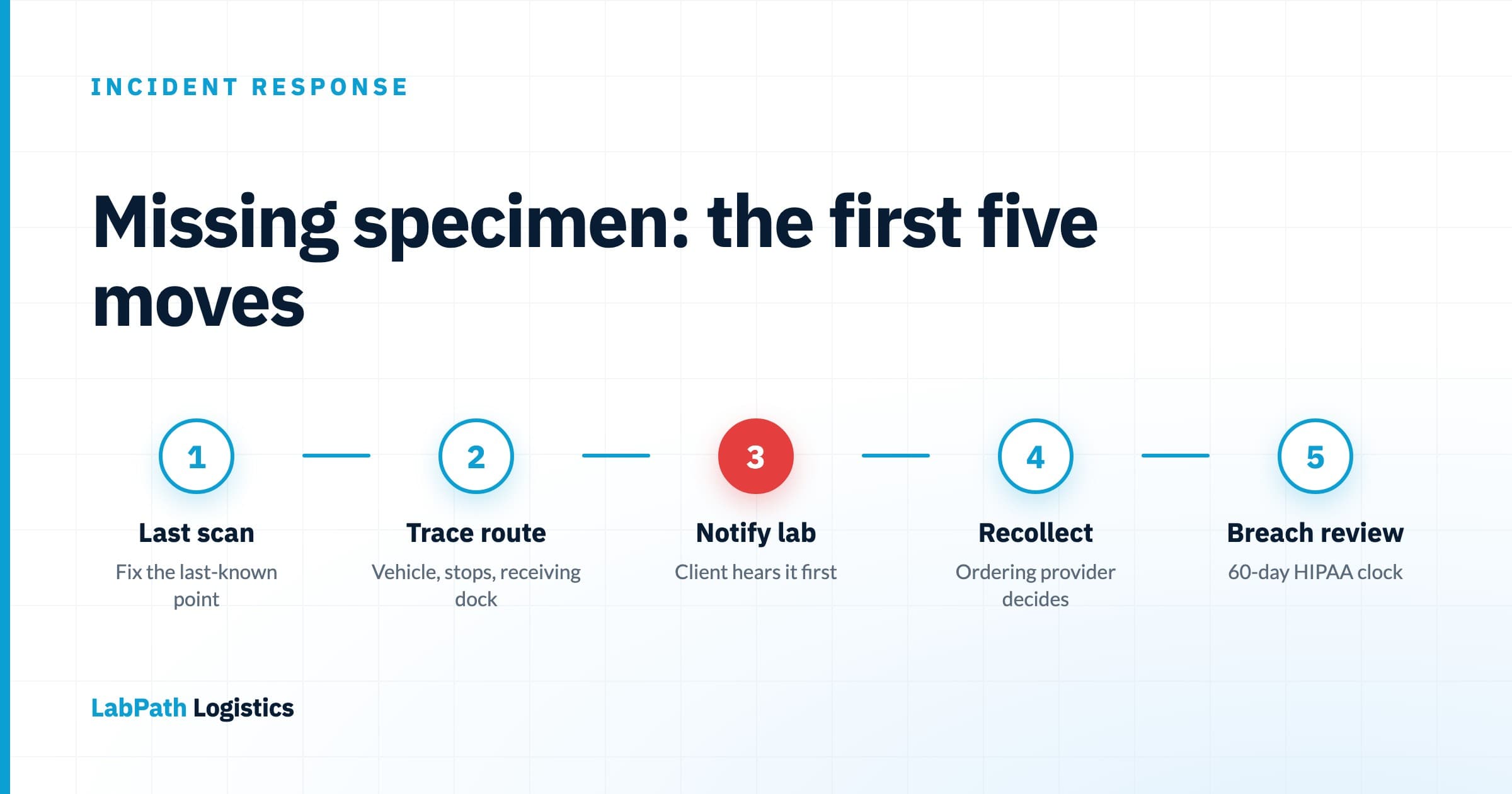
- Fix the last confirmed point. Find the last scan or signature that proves where the package was. Everything after that point is the search area; everything before it is cleared.
- Check the sending site. Confirm the specimen actually left: refrigerator, centrifuge, pending rack, and the lockbox. A meaningful share of 'lost in transit' specimens never got into the bag.
- Trace the vehicle and every stop. Search the cooler, tote, and vehicle, then call each stop made after the last scan. Mis-delivery to another client on the same route is the classic cause.
- Search receiving. Ask the lab to check accessioning backlogs, other departments, and send-out staging. Unscanned drop-offs can sit unnoticed beside the right bench.
- Tell the ordering facility now, not after the search. The provider needs the earliest possible warning to decide whether and when to recollect.
- Write it down as you go. Times, names, places searched. This record becomes the incident report and, if needed, the privacy assessment.
Do not wait for certainty before notifying
The instinct is to find the specimen first and report second. Reverse it. A facility that learns of a possible loss in the first hour can still recollect a timed or fasting specimen the same day. One that learns at 5 p.m. usually cannot.
Who Decides on Recollection
Not the courier, and not the lab's front desk. Whether to redraw, wait, or pursue another route is a clinical decision that belongs to the ordering provider. The logistics job is to make that decision possible: say plainly what is missing, when it was last confirmed, and what has been searched.
Triage by replaceability. A routine chemistry tube can usually be redrawn. A surgical biopsy, a bone marrow aspirate, or a timed draw tied to a dose cannot. Irreplaceable specimens deserve their own handling rules before anything goes wrong — our pathology slide and block transport guide covers why they should never ride as anonymous items in a mixed tote.
When a Missing Package Becomes a HIPAA Incident
A specimen bag almost always carries more than the specimen. The tube label and the paper requisition typically show a patient name, date of birth, and ordered tests. If that package is lost outside the facility, protected health information is unaccounted for, and the question is no longer only operational.
Under 45 CFR 164.402, an impermissible use or disclosure of PHI is presumed to be a breach unless the covered entity or business associate demonstrates a low probability that the information was compromised, based on a risk assessment of at least four factors:
- The nature and extent of the PHI involved, including how identifiable it is.
- The unauthorized person who used the PHI or received it.
- Whether the PHI was actually acquired or viewed.
- The extent to which the risk has been mitigated.
A sealed bag delivered to the wrong clinic and returned unopened is a very different assessment from a bag that vanished from an unlocked vehicle. That assessment is the covered entity's to make with its privacy officer — but it can only be made if the courier reports the loss.
60 calendar days
Outer limit for a business associate to notify the covered entity after discovering a breach of unsecured PHI — and the rule says 'without unreasonable delay' first (45 CFR 164.410(b))
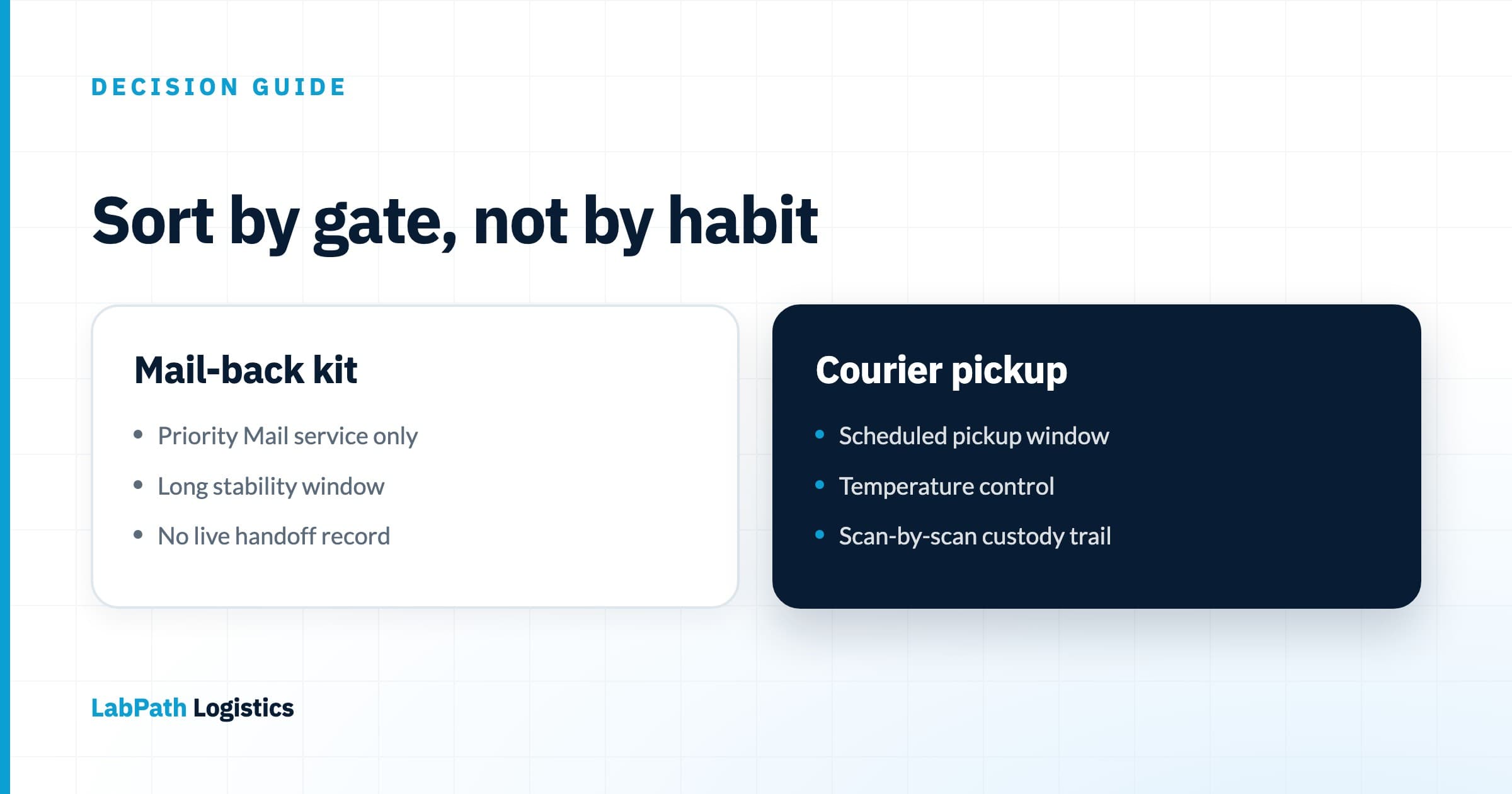
A medical courier that handles PHI for a lab or clinic is a business associate, and 45 CFR 164.410 sets its duty: notify the covered entity without unreasonable delay and in no case later than 60 calendar days after discovery. The clock starts on the first day the breach is known, or would have been known with reasonable diligence. Many business associate agreements shorten that window considerably, so read yours. Our HIPAA guide for medical couriers covers what a BAA should say, and Texas adds its own layer, covered in our HB 300 guide.
A Houston Scenario: The Tote That Got Off Early
Picture a courier running an afternoon loop from Katy through the Energy Corridor to a reference lab near the Texas Medical Center. A dermatology office hands over one biopsy bag at 2:10 p.m. At 4:30 p.m. the lab's accessioning team has no record of it.
With a paper log, the search starts with a phone tree and a driver's memory. With a scan at each handoff, it starts with a fact: the bag was scanned at pickup and not scanned at the lab, and the route made two stops in between. The dispatcher calls both. The second, an imaging center, finds the bag inside a tote of its own supplies, still sealed. It is back in custody within the hour, the dermatology office is told what happened, and the sealed, recovered bag gives the privacy officer a short assessment instead of a long one.
What Makes the Next Search Short
Prevention here is mostly about shrinking the search area. The evidence favors closed-loop tracking: a 2025 root cause analysis in Risk Management and Healthcare Policy (Huang et al.) describes a hospital that added barcode tracking and process changes after a missing surgical specimen and reported no lost surgical pathology specimens over the following two years.
- Count at every handoff. The sender states how many packages; the courier confirms the count; the receiver confirms it again. A mismatch is caught at the door, not the next morning.
- Scan the package, not just the stop. A stop-level signature proves the courier was there. A package-level scan proves the specimen was.
- Get receiver acknowledgment. A drop-off without a named person accepting it is the weakest link in most chains. See our chain of custody guide.
- Flag irreplaceable specimens. Separate bag, separate line on the manifest, direct handoff to a person.
- Reconcile daily. The lab compares what was sent to what was accessioned before the day closes, while memories and vehicles are still fresh.
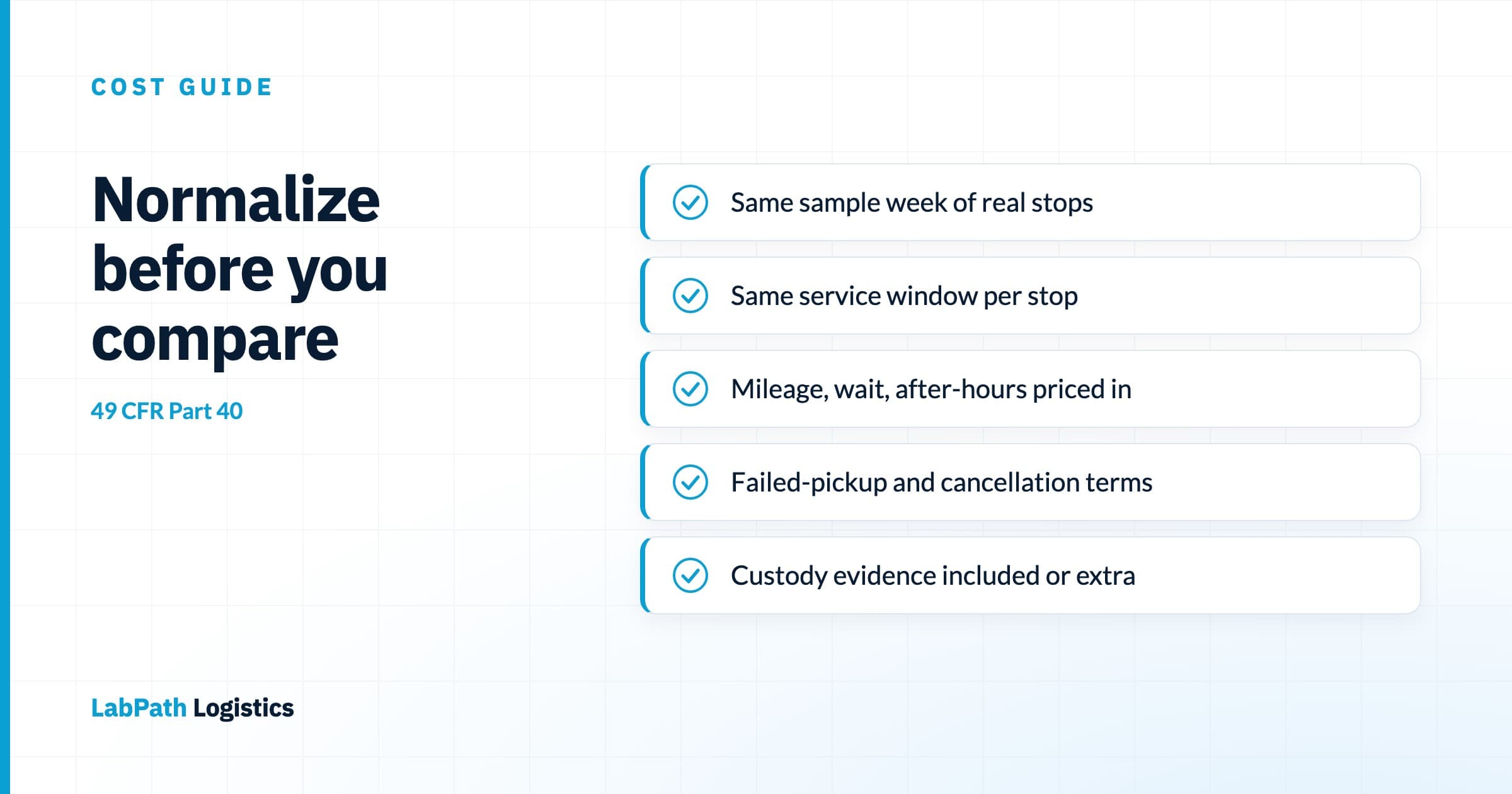
- Put the reporting clock in the contract. Name how fast the courier must report a missing package and to whom. Our SLA guide and RFP checklist show where that language belongs.
One more item belongs on the list: money. General liability policies often exclude property in a courier's care, and cargo limits can be low. Our courier insurance guide explains what to ask for before a loss, not after.
Frequently Asked Questions
What should a lab do first when a specimen is lost in transit?
Identify the last confirmed scan or signature, then search in order: the sending site, the courier's vehicle and containers, every stop made after the last scan, and the receiving area. Notify the ordering facility immediately, in parallel with the search, so the provider can decide on recollection.
Is a lost lab specimen a HIPAA breach?
It can be. If the package carried a labeled tube or requisition, protected health information is unaccounted for. Under 45 CFR 164.402 that is presumed to be a breach unless a four-factor risk assessment shows a low probability the information was compromised. The covered entity's privacy officer makes that determination.
How long does a medical courier have to report a lost specimen?
As a business associate, a courier must notify the covered entity of a breach of unsecured PHI without unreasonable delay and no later than 60 calendar days after discovery under 45 CFR 164.410. Business associate agreements commonly set a much shorter deadline, and operationally the facility should hear the same day.
Who decides whether a patient needs to be redrawn after a lost specimen?
The ordering provider. The courier and laboratory supply the facts — what is missing, when it was last confirmed, and what has been searched — and the provider decides whether and when to recollect.