STAT vs Same-Day Medical Courier in Houston
November 3, 2026 · By LabPath Logistics Editorial Team, Medical Logistics Desk
Quick Answer
Book STAT only when a clinical decision is waiting on the result or the lab's written limit leaves no slack. Use Rush when the limit is tight but not urgent, Same-Day for ordinary daily work, and a shared scheduled stop for anything that can wait for a sweep. Three questions decide it: what the lab's clock says, what lateness costs, and whether the run can ride a loop.
A Houston clinic manager opens the courier portal and books STAT for the afternoon run, because STAT feels safe. Nobody checked whether the specimen was due at the lab in ninety minutes or in six hours. Multiply that habit across a month of pickups and the invoice shows a premium tier paying for work that never needed it.
This guide is about the STAT vs same-day medical courier decision in Houston, and it gives you one tool for making it, the Three-Question Tier Test. It covers logistics and operations only. Your performing laboratory and medical director decide what a specimen can tolerate; the test just helps you buy the transport that matches their answer.
When Should You Book STAT Instead of Same-Day?
Book STAT when a clinical decision is waiting on the result, or when the lab's written transport limit leaves no slack between pickup and drop-off. Book Same-Day when the specimen has a window measured in hours and the lab expects it that day. Book a shared scheduled stop when the run can wait for a loop. Booking STAT for everything pays a premium on every stop and teaches nobody which runs are actually urgent.
$56 gap at the starting price
LabPath's public, nonbinding rate card lists STAT from $95 and Same-Day from $39, with mileage and handling adjustments. It is an estimate, not a booking quote; the quote produced at booking is authoritative.
What Is the Three-Question Tier Test?
The Three-Question Tier Test: save this and send it to your lab director
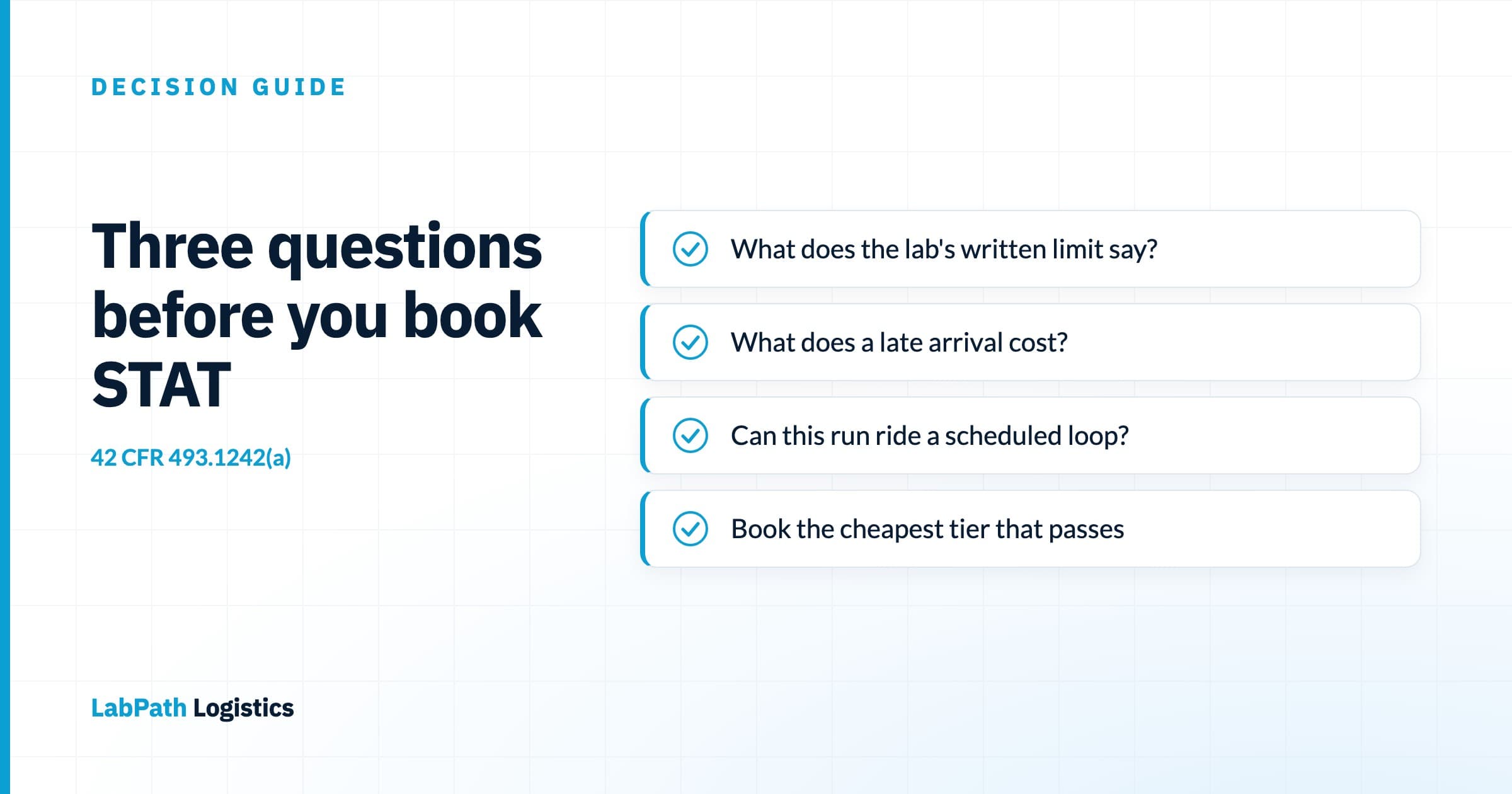
Ask three questions for each recurring run, in this order. Question 1, Clock: what does the performing lab's written collection manual say is the maximum time from collection to receipt, and how much of it is already gone when the courier arrives? Question 2, Cost of late: if this specimen arrives late, is the cost a recollection, a delayed treatment decision, or nothing? Question 3, Loop: can the run join a scheduled pickup sweep without breaching the clock? Book the cheapest tier that passes all three. If a run fails Question 1 on a normal day, it is a STAT run. If it passes all three with margin, it belongs on a scheduled stop.
The order matters. Most clinics start with the tier they like and look for reasons to justify it. The test starts with the lab's own paper and works toward the tier.
Question 1: What Does the Lab's Written Limit Actually Say?
Under the CLIA regulation at 42 CFR 493.1242(a), a laboratory must establish and follow written procedures for specimen submission and handling, including conditions for transport and the acceptability of specimens. That document is your source of truth. A courier tier is a way of buying time, so you need the number before you can decide how much to buy.
Read the limit for each specimen type you send, then subtract what you control: how long the specimen waits at your front desk, how long it takes to pack, and the realistic drive time across Houston at that hour. What remains is your transport budget. A budget measured in hours points to Same-Day or Rush. A budget that is nearly gone before the courier arrives points to STAT. Our guides on CSF specimens and the lab turnaround window show how short some of these limits get.
Question 2: What Does a Late Arrival Cost?
Lateness has three prices. The cheapest is nothing: a stable specimen that arrives two hours after the target is still acceptable. The middle one is a recollection, which costs a second draw, a second pickup, and a patient who has to come back. The expensive one is a delayed decision, where someone is waiting on a result to act. Only the third price reliably justifies the STAT premium.
A useful habit is to write the late-cost next to each recurring run in your courier plan, in plain words. When the answer is "nothing" or "recollection," ask whether a cheaper tier plus an earlier pickup time protects you better than a premium tier on a late one. When the answer is "decision," book the tier and stop debating. Our STAT delivery vetting checklist covers what to verify before you rely on that tier.
Question 3: Can This Run Ride a Scheduled Loop?
A shared scheduled stop puts your pickup on a loop with other facilities, so you trade control of the exact minute for a lower price per stop. On the public rate card, shared scheduled stops start from $38 and dedicated scheduled routes from $114. If your lab's limit comfortably covers the loop, the scheduled stop is the right tier for routine work. If you run three or more stops a day, price a dedicated route against separate on-demand calls using our shared vs dedicated route guide.
Consolidation is the quiet saver. A site that sends four same-day pickups a week with the same drop-off can often replace them with one scheduled sweep, and keep on-demand tiers for the exceptions. The specimen pickup schedule guide walks through sweeps versus stops, and the routes overview explains scheduled versus on-demand.
A Houston Scenario: Four Runs, Four Tiers
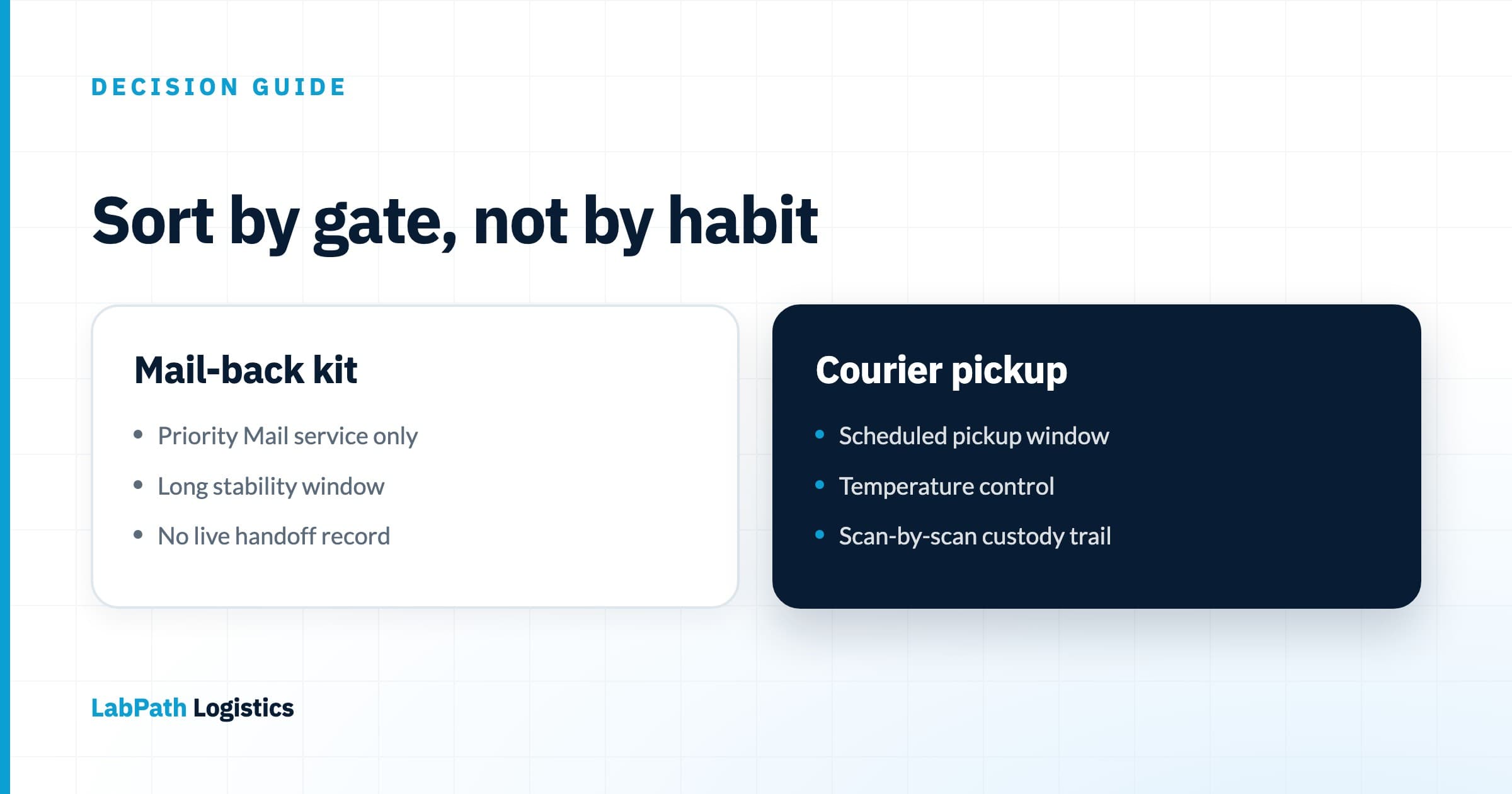
A Houston-area internal medicine clinic runs four recurring pickups. Morning routine blood draws, with a lab limit measured in hours, pass all three questions on a shared scheduled stop. A midday run of time-limited cultures fails the clock budget on a loop and moves to Rush. A same-afternoon draw ordered to inform a treatment decision is a STAT run every time. Weekly send-out kits, stable and lab-approved, stay on a scheduled stop or mail-back. The clinic ends up with four tiers instead of one, each with a written reason, and the STAT line item shrinks to the runs that earn it.
Which Mistakes Make the Tier Choice Backfire?
- Booking STAT after the specimen sat for the afternoon. The premium buys a faster drive, not the time already lost at the front desk. Fix the pickup trigger first.
- Treating STAT as a promise of a minute count. Check what your agreement defines; our guide to which clock defines on-time shows why the definition matters more than the label.
- Downgrading a tier to save money without moving the pickup earlier. A cheaper tier needs a bigger margin on the front end.
- Skipping the written record. If a run is late, a courier timeline with pickup and drop-off scans is what lets you see which segment lost the time. See our custody checklist.
How Do You Audit Your Current Tier Mix?
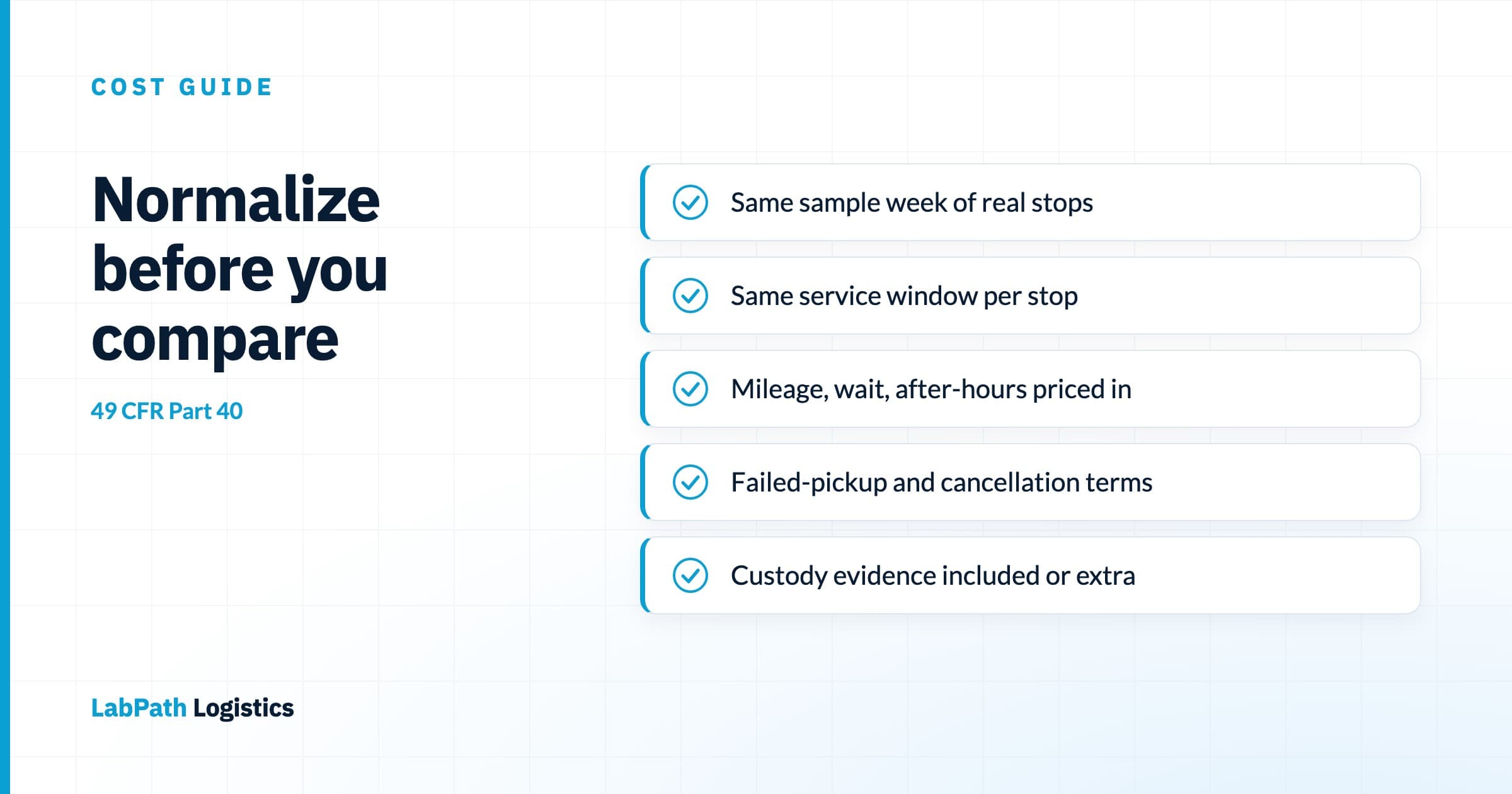
Pull your last 30 days of courier invoices and sort every stop by tier. For the STAT and Rush stops, find the lab's written limit and the late-cost answer. Anything that fails to justify its tier is a candidate to move down. A 30-day pilot on one site is a low-risk way to test the downgrade before changing the whole account, and our quote comparison guide helps you compare tiers across vendors on equal terms. Section 493.1242(b) of the CLIA rule also requires the laboratory to document the date and time it receives a specimen, which gives you a receiving timestamp to check your courier's timeline against.
LabPath Logistics is in early access for Greater Houston, and we make no fixed-minute pickup promise. Our booking model has no patient data fields, by design. The nonbinding estimator lets you price the same stop at two tiers side by side; see the services for planned levels and the platform preview for what is verified today.
Frequently Asked Questions
What is the difference between STAT and same-day medical courier service?
STAT is the fastest, highest-priced tier, intended for runs where a decision is waiting or the lab's limit leaves no slack. Same-Day delivers within the day at a lower price. Exact definitions vary by provider, so check how your agreement defines each tier and which clock applies.
How much more does STAT cost than same-day in Houston?
On LabPath's public, nonbinding rate card, STAT starts from $95 and Same-Day from $39, before mileage and handling adjustments. It is an estimate rather than a booking quote, and the quote produced at booking is authoritative. Other providers price differently, so compare like for like.
Who decides how fast a specimen must arrive?
The performing laboratory does. CLIA, at 42 CFR 493.1242(a), requires the lab to establish written procedures covering specimen submission, handling, and transport conditions. Follow the lab's collection manual and involve your medical director before changing how a specimen type travels.
Can a scheduled courier stop replace some STAT runs?
For specimens with a stability window measured in hours, often yes, provided the loop's timing fits inside the lab's written limit. Run each recurring pickup through the clock, cost-of-late, and loop questions before moving it, and test the change in a short pilot.