Urgent Care Lab Courier Houston: The Weekend Gap
October 8, 2026 · By LabPath Logistics Editorial Team, Medical Logistics Desk
Quick Answer
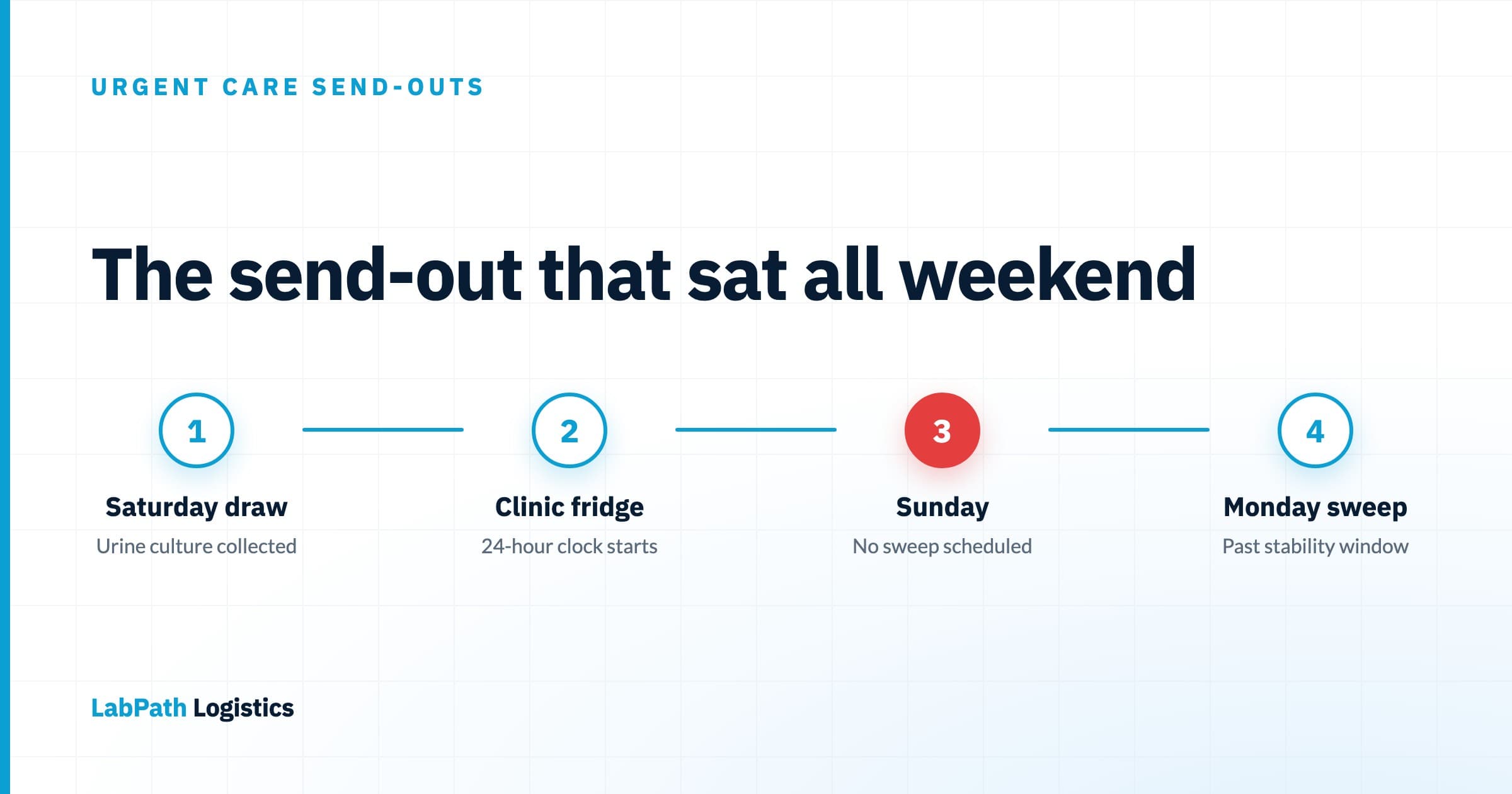
An urgent care lab courier should be scheduled around specimen stability, not office hours. Most urgent cares run waived tests on-site and send cultures and panels out. If the last pickup is Friday afternoon, a Saturday-night urine culture can outlive its stability window before Monday. Match pickups to the shortest clock in your weekend send-out bin.
Your urgent care is open at 7 p.m. on a Saturday. Your send-out courier probably isn't. That mismatch is the quiet source of a familiar Monday problem: a culture or panel drawn over the weekend reaches the reference lab after it stopped being testable, and someone has to call the patient back. For a Houston urgent care, the lab courier schedule matters less than whether it lines up with the specimens you actually collect.
This guide is for urgent care operators, clinic managers, and medical directors. It explains why the weekend gap forms, introduces a simple way to triage the send-out bin, and ends with a five-line audit you can run before the next holiday weekend.
Why Do Urgent Care Send-Outs Fail on Weekends?
Urgent care runs on two kinds of lab work. Rapid tests for strep, flu, COVID-19, pregnancy, and urinalysis dipsticks happen on-site under a CLIA Certificate of Waiver, which is by far the most common certificate type. Everything else, such as urine cultures, throat culture backups, CBCs, metabolic panels, and STI testing, gets packaged and sent to a reference or hospital lab.
80%
Share of non-exempt CLIA-certified laboratories that hold a Certificate of Waiver, per CMS CLIA database figures published May 2023
That CMS breakdown explains the shape of the problem. A waived lab can run simple tests but cannot run the cultures and panels that patients still need. Those send-outs depend entirely on a courier. Urgent care hours are built for evenings and weekends. Many courier sweeps are built around a weekday lab schedule. The specimens collected in the gap wait.
The sector is large and still growing. The Journal of Urgent Care Medicine reports the U.S. urgent care center count reached 14,655 as of April 1, 2026. More centers in more Houston suburbs means more send-out bins sitting in more break-room refrigerators on Sunday.
What Is the Three-Clock Send-Out Rule?
Every specimen in the send-out bin is on a clock, and the clock depends on how it is held. Urine culture is the clearest example. Penn State Health's test catalog says to deliver the specimen within 2 hours if unrefrigerated, 24 hours if refrigerated, or 48 hours in transport media at room temperature. Your reference lab's own manual governs, but most labs publish limits in the same shape.
- The 2-hour clock: unpreserved, unrefrigerated specimens. These need a pickup tonight or a different collection method. They should never sit for a sweep.
- The 24-hour clock: refrigerated specimens. A Saturday-evening draw needs a Sunday pickup. A Friday-only schedule fails it.
- The 48-hour clock: specimens in transport media or preservative tubes. These can usually survive to a Monday-morning sweep, if the collection kit was used correctly.
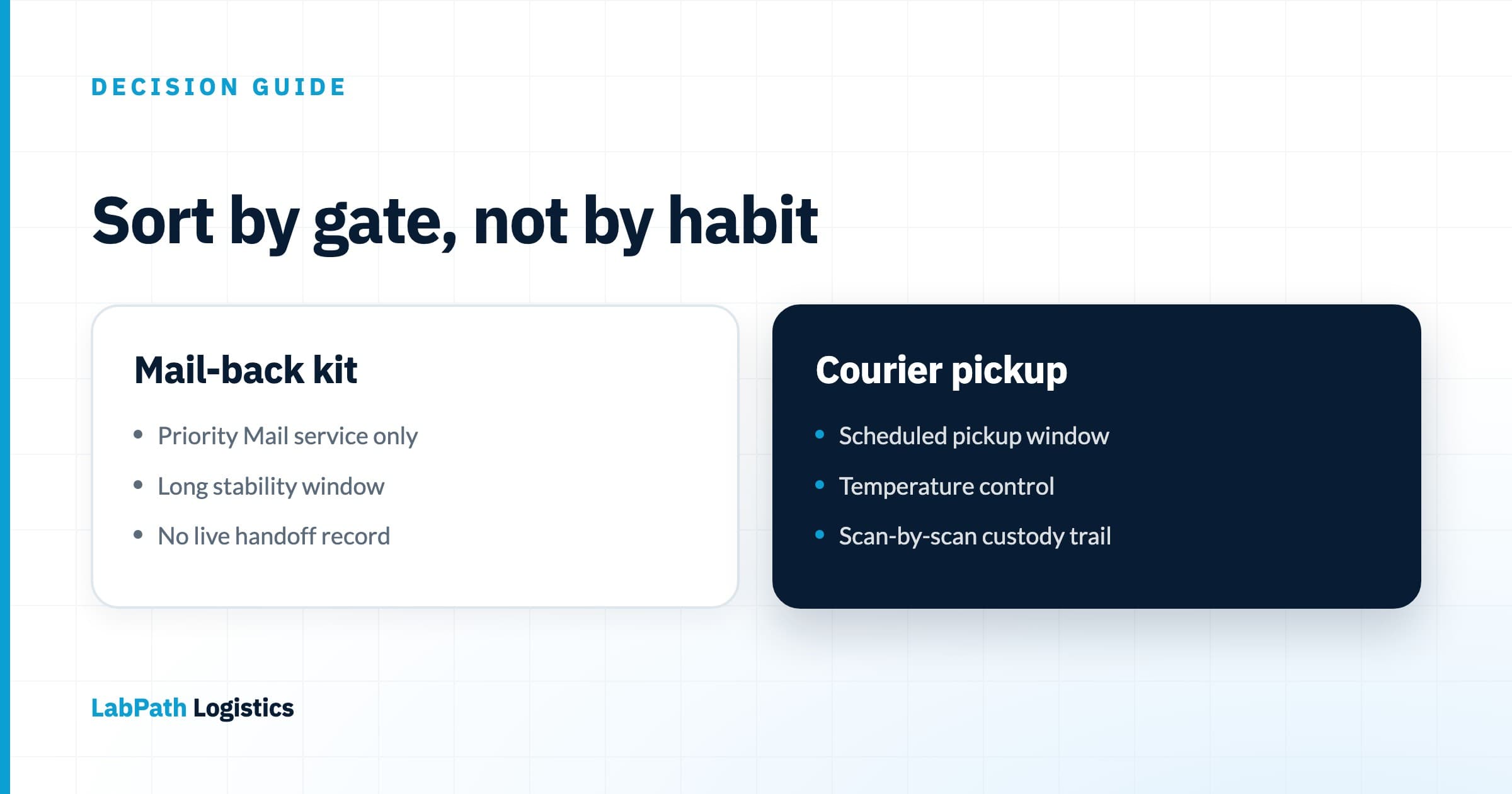
The rule: your pickup schedule must beat the shortest clock you routinely put in the bin. If you cannot change the schedule, change the clock by stocking the right transport tubes and training staff to use them. Our microbiology transport guide and respiratory specimen guide cover the specimen-specific details.
A Houston Scenario: The Cypress Saturday
Picture a walk-in clinic off US-290 in Cypress. Saturday traffic is heavy with UTIs, sore throats, and work-injury visits. The reference lab's courier picks up weekdays at 4 p.m. Over one weekend the clinic collects several urine cultures and a handful of blood draws. Some cultures go into preservative tubes, some go into plain cups in the fridge, and one plain cup sits on the counter until close. Monday's sweep carries all of them together.
The preserved cultures are fine. The refrigerated plain cups are past 24 hours. The counter cup was past its window by Saturday night. None of this is a courier failure in the usual sense. The courier arrived exactly when contracted. The contract just didn't match the clinic. If a clinic in this spot leans on a drop box instead, our specimen lockbox guide explains why a Houston lockbox is not a refrigerator.
How Should an Urgent Care Close the Weekend Gap?
There are three practical fixes, and most clinics end up combining two.
- Change the clock: standardize on preservative tubes and transport media for anything that might sit, and make that a stocked, audited kit item.
- Add a scheduled weekend stop: a fixed Saturday-evening or Sunday pickup on a shared route, priced as a scheduled stop instead of an on-demand call. Our pickup schedule guide shows how to size it.
- Keep an on-call option: for the rare specimen that cannot wait at all, an on-demand run with a clear cost owner. Our after-hours courier guide compares on-call and standing coverage.
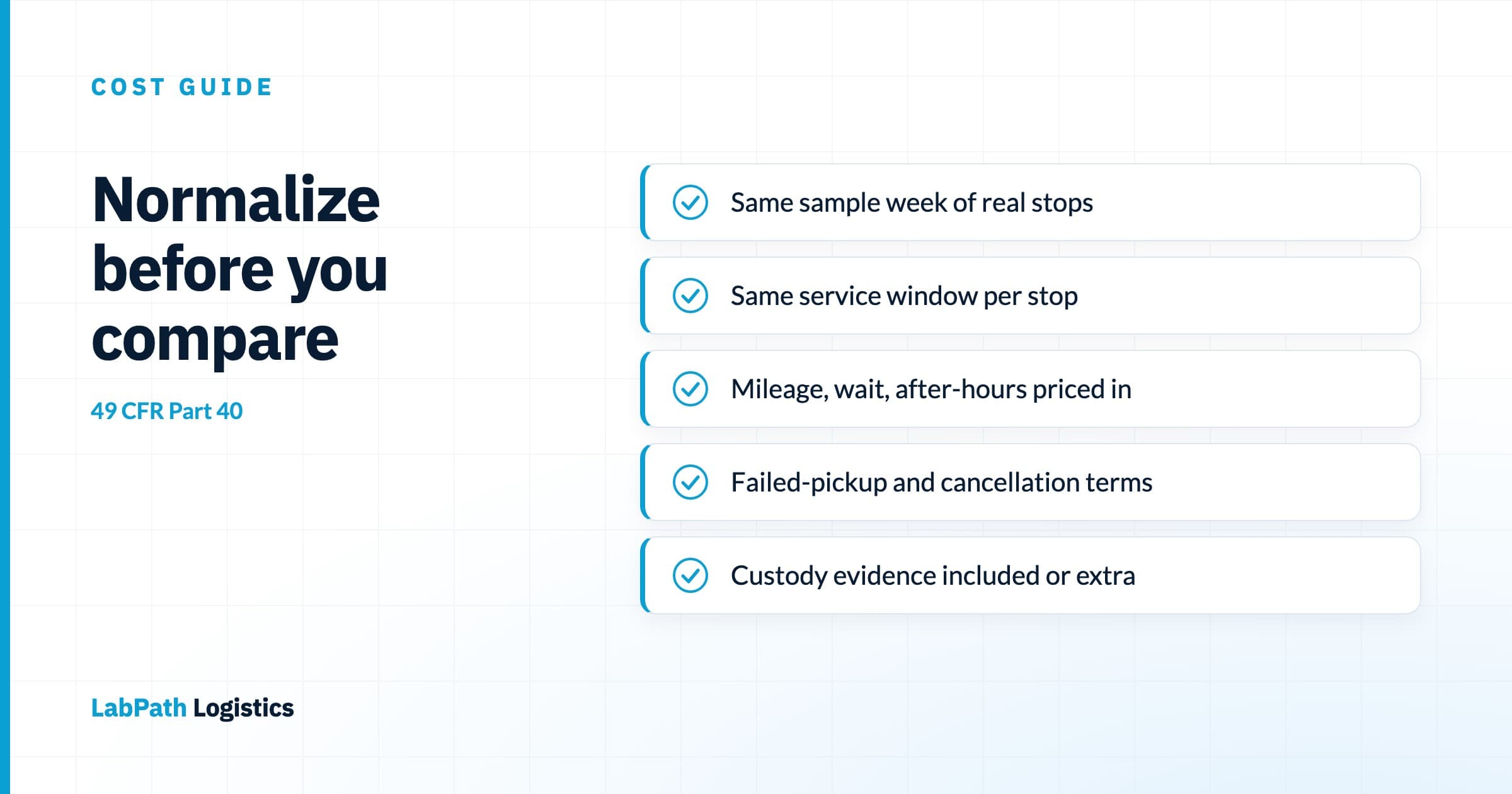
Price the weekend stop before you assume it is too expensive. Compare one scheduled weekend pickup against the true cost of a recollection: the patient callback, the second visit, the second draw, and the second run. Our specimen rejection guide lists the transport-related causes labs flag most often. For a quick reference number, the LabPath estimator gives a nonbinding estimate for a shared scheduled stop without signup.
The Five-Line Weekend Send-Out Audit
Run this on the last four weekends. You need the send-out log, the courier manifests, and the reference lab's rejection or comment reports.
- Last pickup: what time and day does the final courier sweep leave before the weekend, and when does the first one return?
- Shortest clock: which specimen type in the bin has the shortest stability limit under your lab's manual?
- Hold method: was each specimen held the way its clock assumes, fridge, room temperature, or transport media?
- Rejections: how many weekend send-outs came back rejected, canceled, or flagged for delay?
- Owner: who decides on Saturday night whether a specimen gets an on-demand run, and who pays for it?
Save and send this
Forward the five lines to your clinic manager and medical director with one question: "Does our last weekend pickup beat our shortest clock?" If the answer is no, you already know which of the three fixes to price first.
What Should an Urgent Care Require From a Lab Courier?
- Pickup windows written to match your posted clinic hours, including holidays.
- Temperature-appropriate transport with a record for refrigerated specimens.
- Package-level scans at pickup and drop-off, not only a stop signature.
- A named receiver acknowledgment at the lab.
- Same-day exception reports when a pickup is missed or late.
Not sure a new courier can hold a weekend window? Test it before you sign. Our 14-day pilot scorecard shows how to measure on-time pickups and receiver acknowledgment on your own route. If you also operate a freestanding emergency department, its send-out pattern is different, and our freestanding ER courier guide covers it.
Frequently Asked Questions
Do urgent care centers need a medical courier?
Usually, yes. Most urgent cares run simple waived tests on-site but send cultures, blood panels, and STI testing to a reference or hospital lab. Those send-outs depend on a courier whose pickup times match the clinic's evening and weekend hours.
How long can a urine culture wait before going to the lab?
It depends on how it is held and on your lab's manual. One academic lab catalog lists 2 hours unrefrigerated, 24 hours refrigerated, or 48 hours in transport media at room temperature. Check your reference lab's specimen manual for the limits that apply to you.
What happens to urgent care specimens collected on weekends?
If the courier only runs weekdays, weekend specimens wait in the clinic until Monday. Specimens in preservative or transport media may stay testable, but refrigerated or unpreserved specimens can exceed their stability window and be rejected.
How can an urgent care reduce weekend specimen rejections?
Match pickup times to the shortest stability limit in the send-out bin. Use preservative tubes and transport media where appropriate, add a scheduled weekend pickup, and name who approves an on-demand run for specimens that cannot wait.